%20Gradient%20%E2%80%94%20light%20to%20dark.png)
Coauthored with Andrew Weng (University of Michigan) and William Chueh (Stanford University), published in Joule. This perspective, entitled “Limits of electrochemical data for predicting battery lifetime and failure,” was published in Joule and can be accessed here.
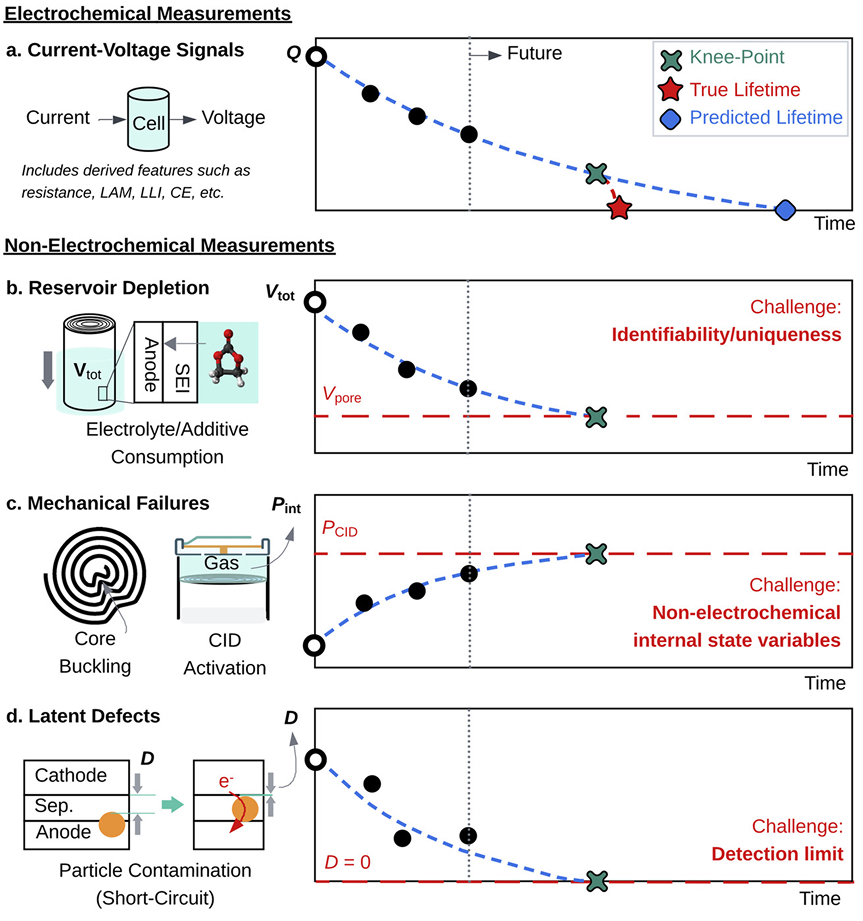
Battery failure modes fall into three cases based on what electrochemical data can reveal: those that leave an early-life signal and can be predicted, those that can only be diagnosed after the fact, and those that leave no electrochemical trace at all. Reproduced from Figure 1 of Attia et al.
Over the past decade, one of the most active areas in battery research has been using machine learning to predict a cell’s lifetime from its first few cycles of electrochemical data. In fact, two of Glimpse’s founders, Peter and Patrick, first met while working on foundational papers in this field. This approach is powerful and is now widely used to accelerate cell testing. However, electrochemical measurements such as voltage, capacity, and resistance are aggregate signals that average over the entire cell, which leaves them blind to defects that are localized or mechanical in nature. In this paper, we set out to understand the limits of electrochemical data for predicting battery lifetime and failure.
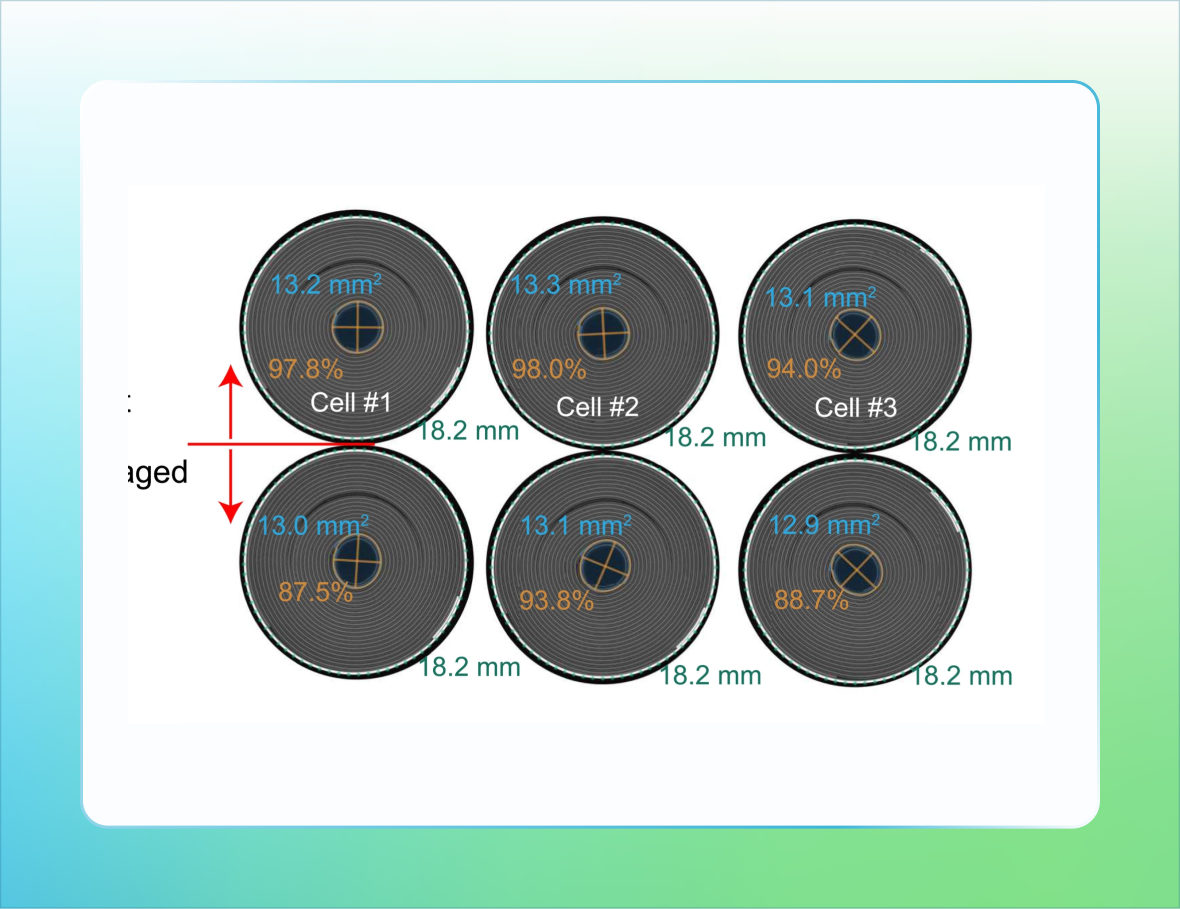
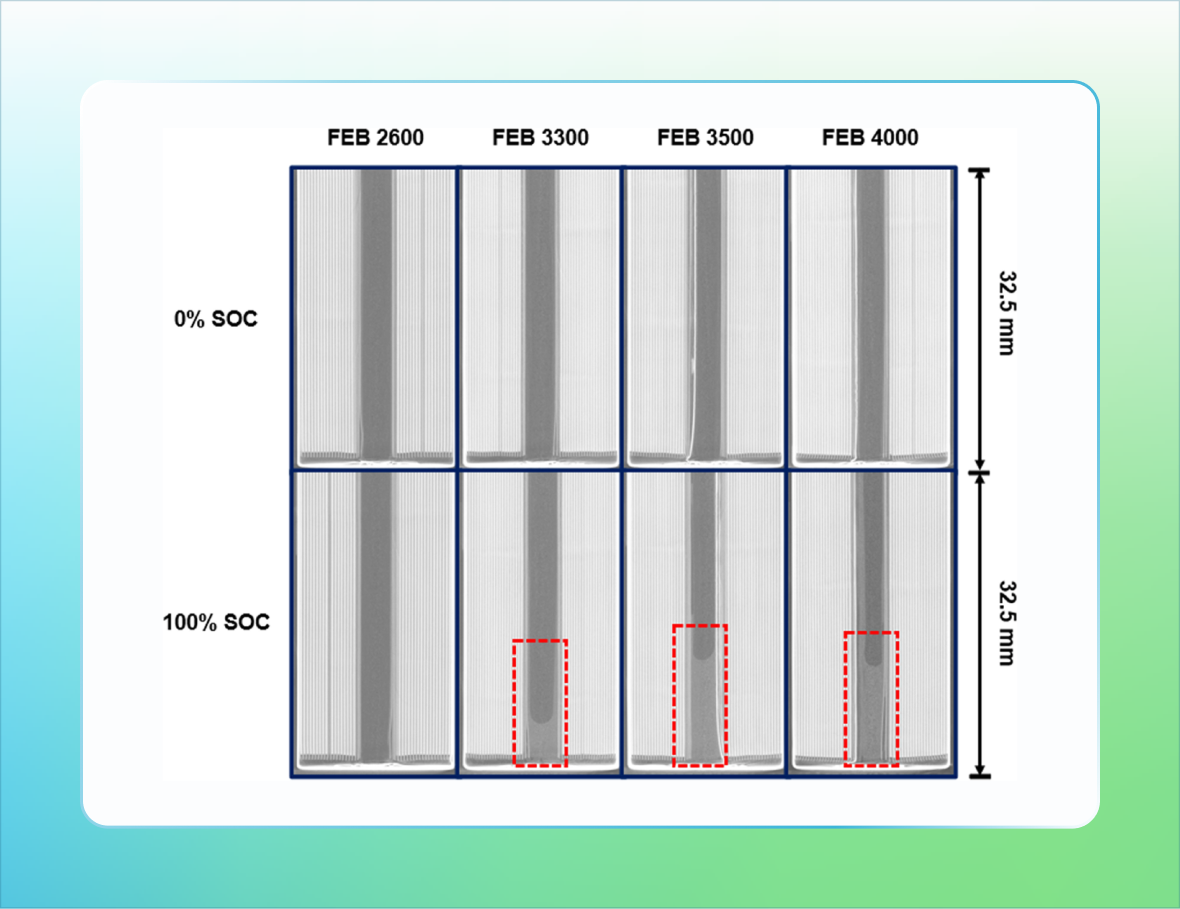
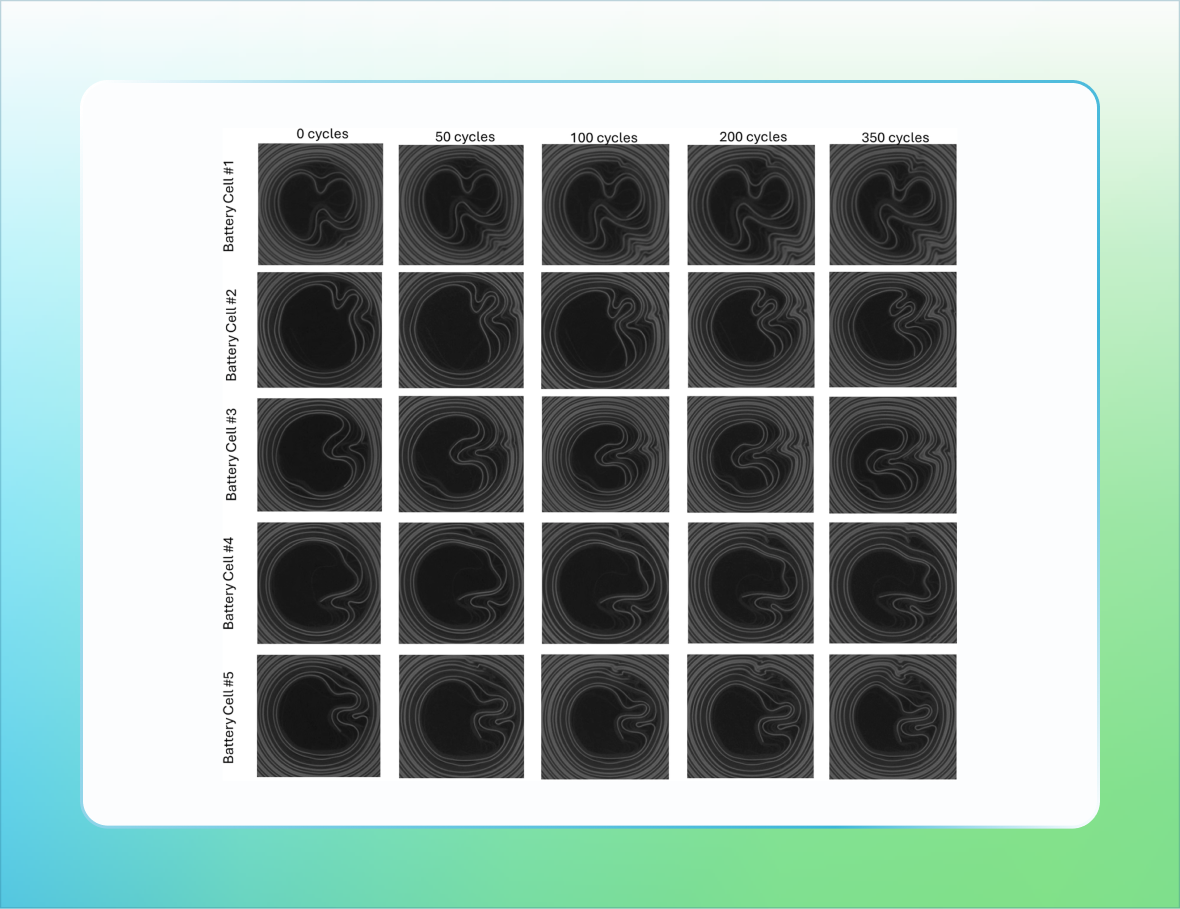
We carefully reviewed the literature to categorize the mechanisms behind major battery cell failure modes. Many key failure modes such as electrolyte depletion, core buckling (“core collapse”), and internal short circuits can’t even be diagnosed after the fact from electrochemical data, let alone predicted from it early in life. And prediction sets a far higher bar than diagnosis: it requires not just that a signal exist, but that it appear early and distinctly enough to forecast an outcome occurring well into the future. At its heart, prediction is an information problem: if the early-life data contains no trace of the mechanism that will eventually cause failure, then no ML/AI model, however powerful, can forecast it. Many of these failure modes clear neither bar; thus, electrochemical testing has fundamental blind spots.
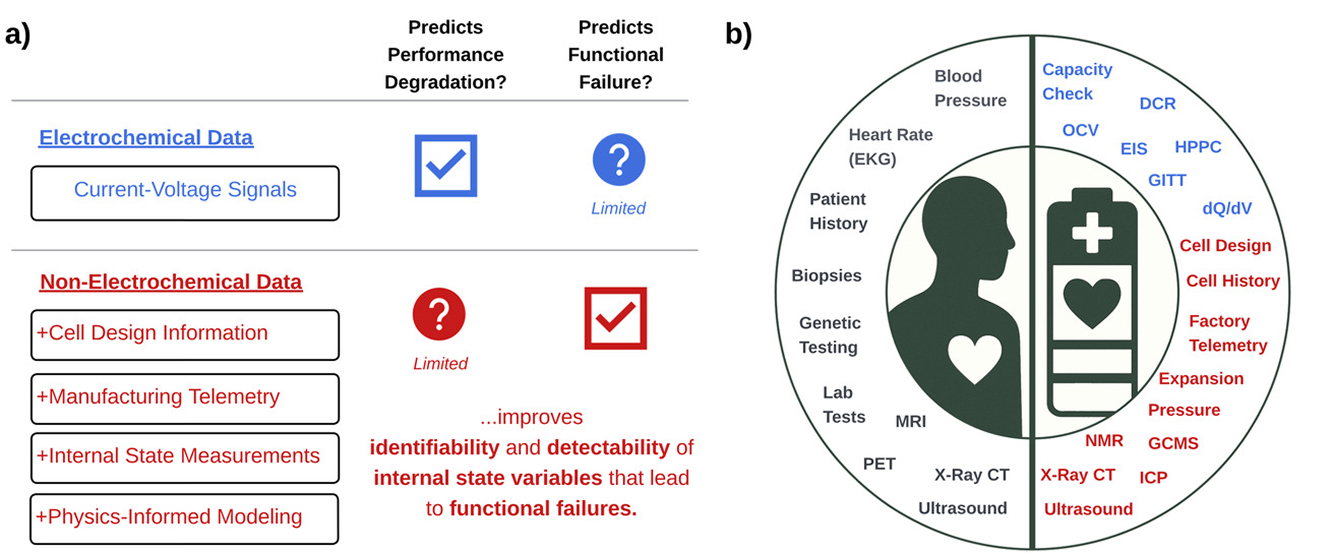
Battery health is much like human health: both have many distinct failure modes, and no single measurement can capture them all. Accurate diagnosis and prognosis require an arsenal of complementary techniques. Reproduced from Figure 6 of Attia et al.
The paper frames this challenge through an analogy to human health: both humans and batteries have many distinct failure modes, and accurately diagnosing or predicting any of them requires a suite of complementary techniques. Just as few serious health conditions can be caught by only monitoring vital signs, many critical battery failure modes cannot be predicted from electrochemical data alone.
In part, this gap motivated us to start Glimpse. Predicting battery lifetime and failure requires a much richer set of data sources beyond electrochemistry: manufacturing data, physics-based models, and a suite of characterization techniques including non-destructive imaging. Specifically, CT scanning directly reveals the contaminants, misalignments, and mechanical changes that electrochemical data cannot detect. Overall, electrochemical and CT characterization provide highly complementary insights, both of which are needed for accurate and comprehensive battery lifetime prediction.
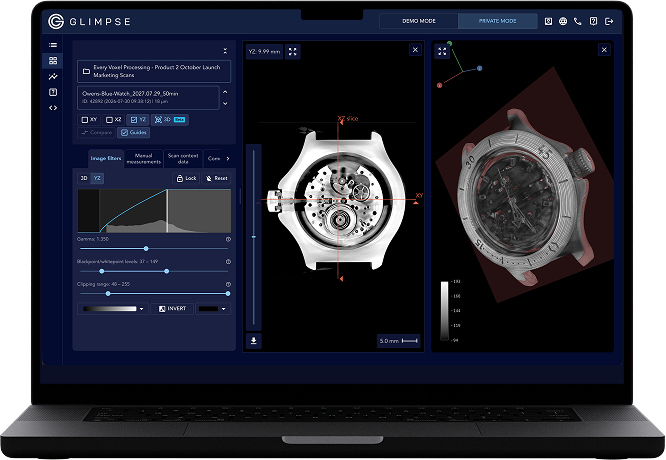
Glimpse’s solutions enable lifetime assessment throughout cell development and qualification. Contact us to leverage high-throughput CT scanning for your own cell characterization and reliability needs.