%20Gradient%20%E2%80%94%20light%20to%20dark.png)
“Core collapse”, or the inward buckling of a cylindrical cell’s jellyroll during cycling, can contribute to capacity loss, internal short circuiting, and even thermal runaway. CT imaging makes it possible to observe this failure mode and track how it progresses, but understanding it well enough to design for it requires a predictive model of the underlying mechanics to capture the stresses building up in the jellyroll. Such a model would let engineers incorporate core collapse risk directly into cell design.
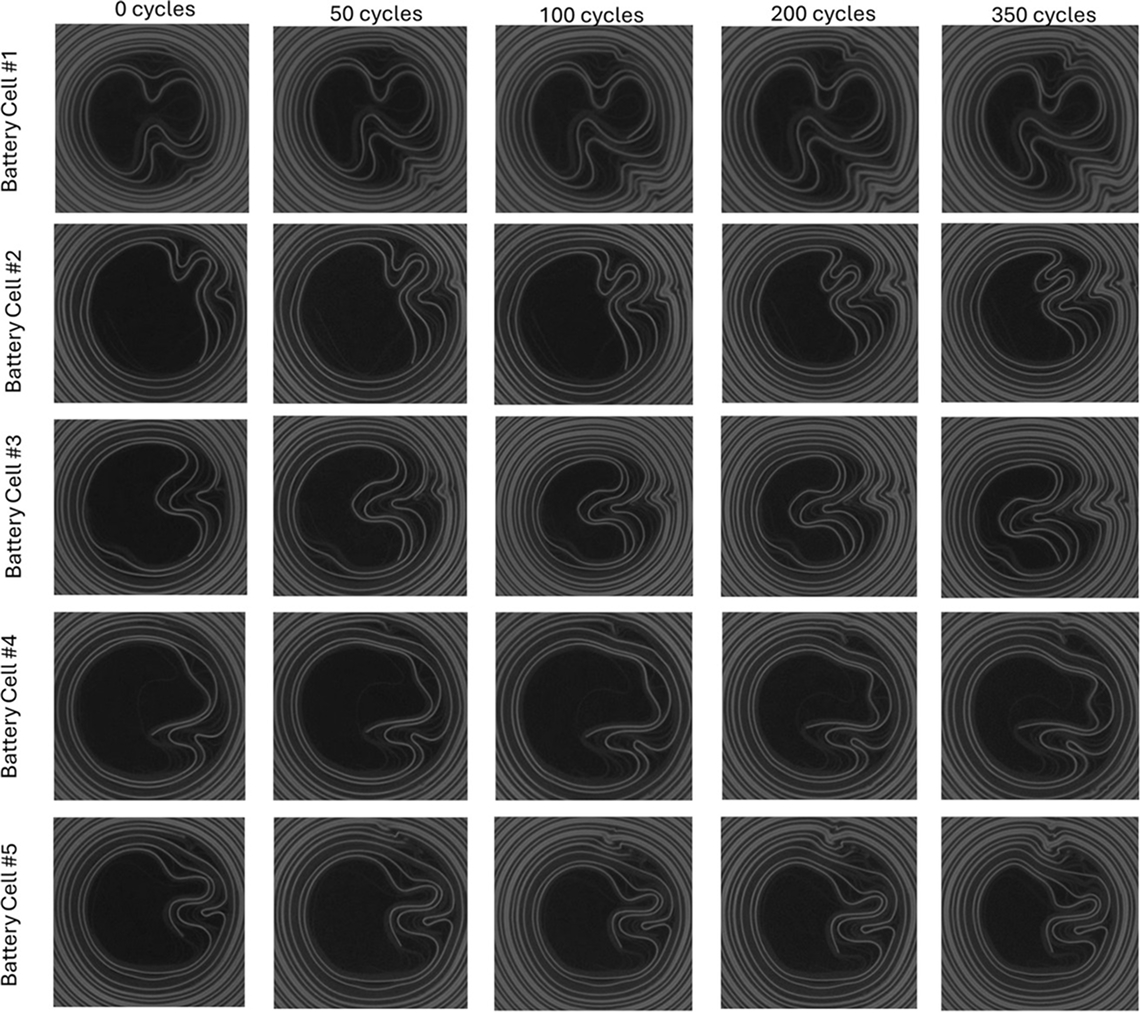
CT cross-sections of five commercial cylindrical cells showing progressive core collapse during cell cycling. Reproduced from Figure 2 of Shi et al.
This modeling challenge motivated Glimpse’s work with Juner Zhu’s lab at Northeastern University, just published in Experimental Mechanics. The paper, entitled “Core Collapse Instability of Spirally Wound Jelly-Roll Lithium-Ion Batteries,” can be read here.
The approach combined two complementary tools: CT scanning to directly measure jellyroll deformation during cycling, and finite element modeling to simulate the internal stresses that drive instability. Together, they produce a mechanistic picture of how hoop compression, radial stress, and interfacial constraints interact to trigger core collapse. Two findings stand out: first, a local geometric imperfection or asymmetry is needed to serve as a “hotspot” that seeds the collapse; and second, much of the stress is borne by the jellyroll’s inactive components. Notably, spiral buckling is a fundamental mechanical modeling problem in its own right, so this work may extend to other fields with similar geometric problems.
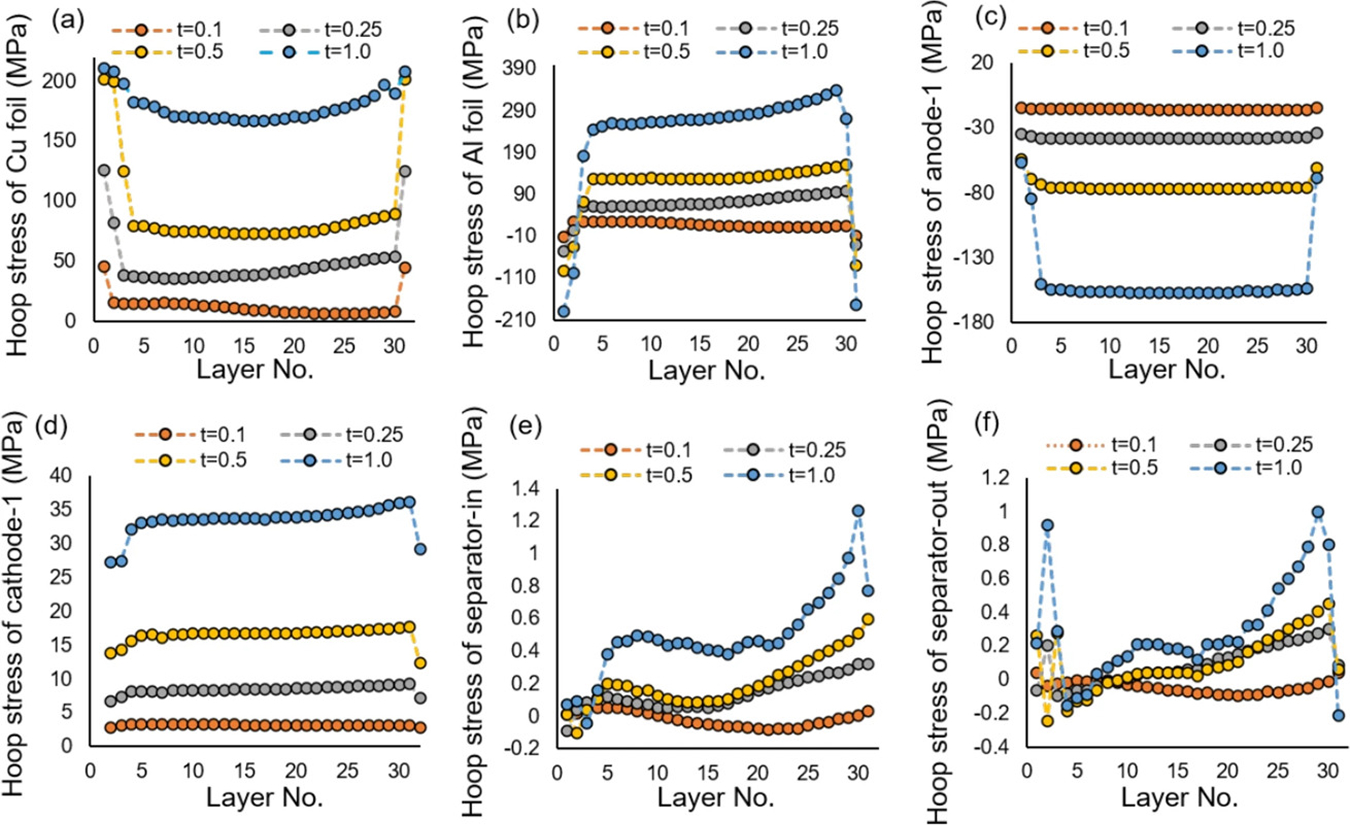
Stress for each jellyroll component as a function of layer number and time. Reproduced from Figure 7 of Shi et al.
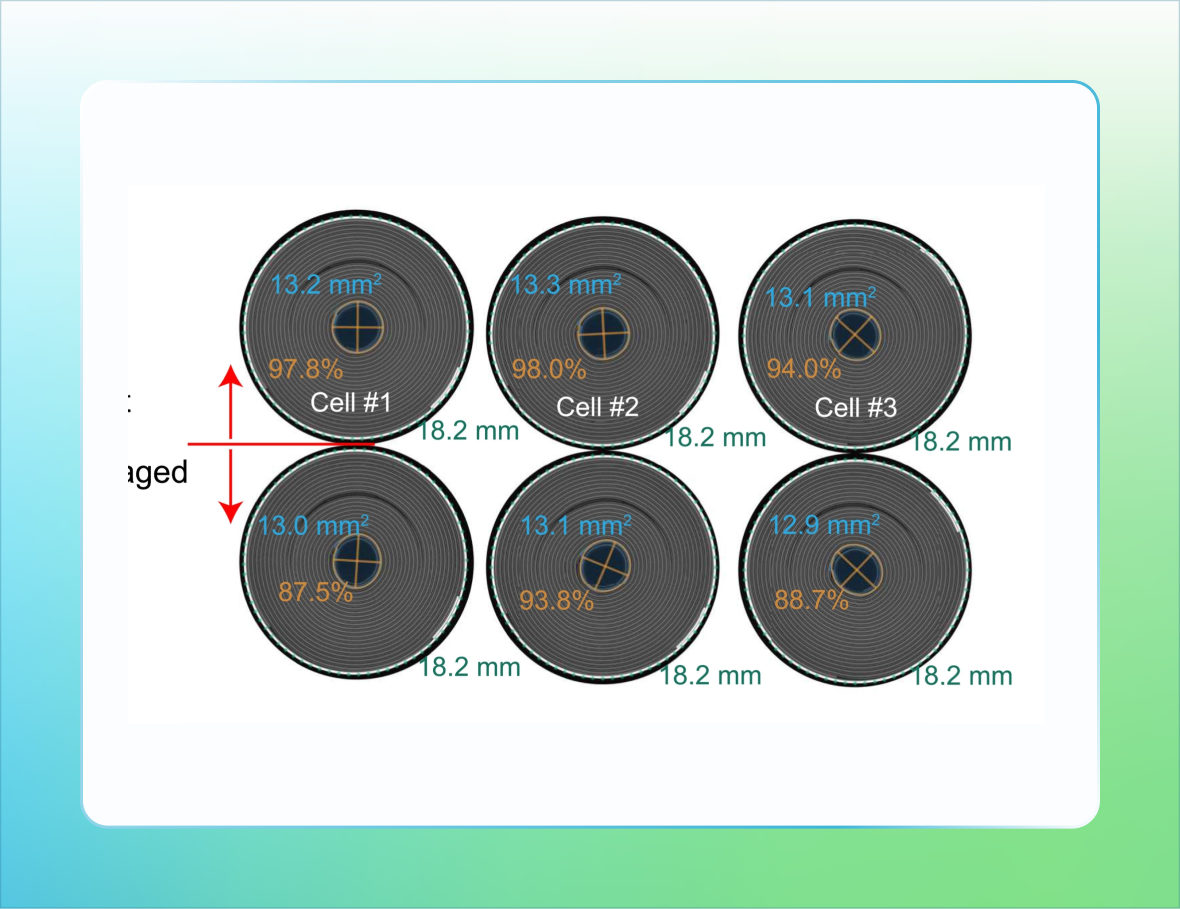
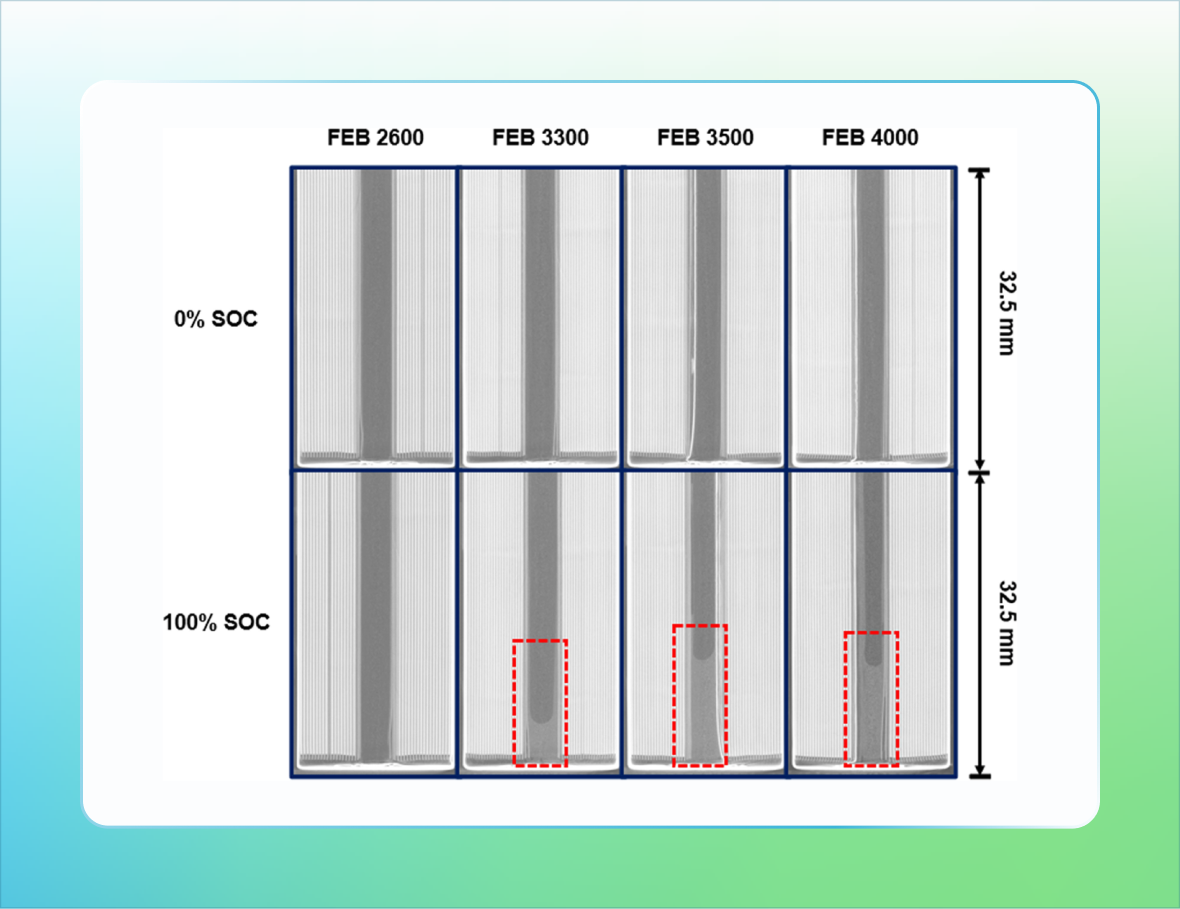
CT scanning was central to this work. Glimpse scanned commercial cells at multiple states of charge and states of health, enabling quantitative tracking of jellyroll geometry over time to validate the mechanical model.
CT scanning is uniquely suited to reveal cell mechanical degradation, and Glimpse enables the throughput and image quality needed to make this analysis practical at scale. Contact us to leverage high-throughput CT scanning for your own cell characterization and reliability needs.