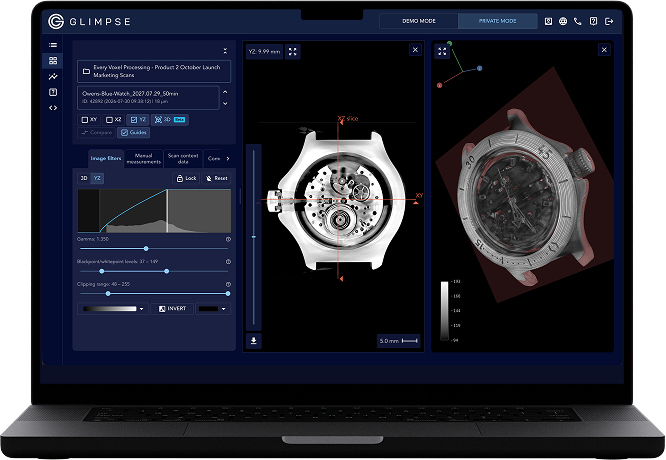

Steve LeVine's The Electric, part of The Information, broke the story of Glimpse's founding and seed round: two Tesla veterans applying X-ray technology to one of the hardest problems in EV battery manufacturing — finding defects as cells are made, before they cause bigger problems.
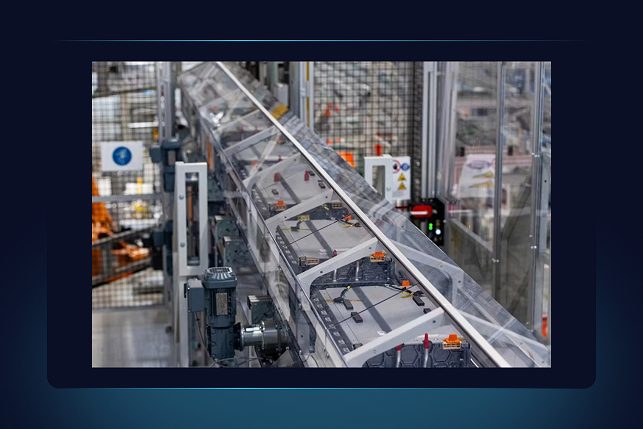
The piece is a clear-eyed primer on why the problem is so unforgiving. Nearly every component in a cell has to be manufactured almost perfectly, to dimensions often within a tenth the thickness of a human hair and free of microscopic contaminants; when those conditions aren't met, a cell can short. LeVine revisits the 2021 recall of more than 141,000 Chevy Bolts — traced to a folded separator combined with a torn electrode tab, at a cost of $2B to LG Energy Solution — as the industry's cautionary tale.
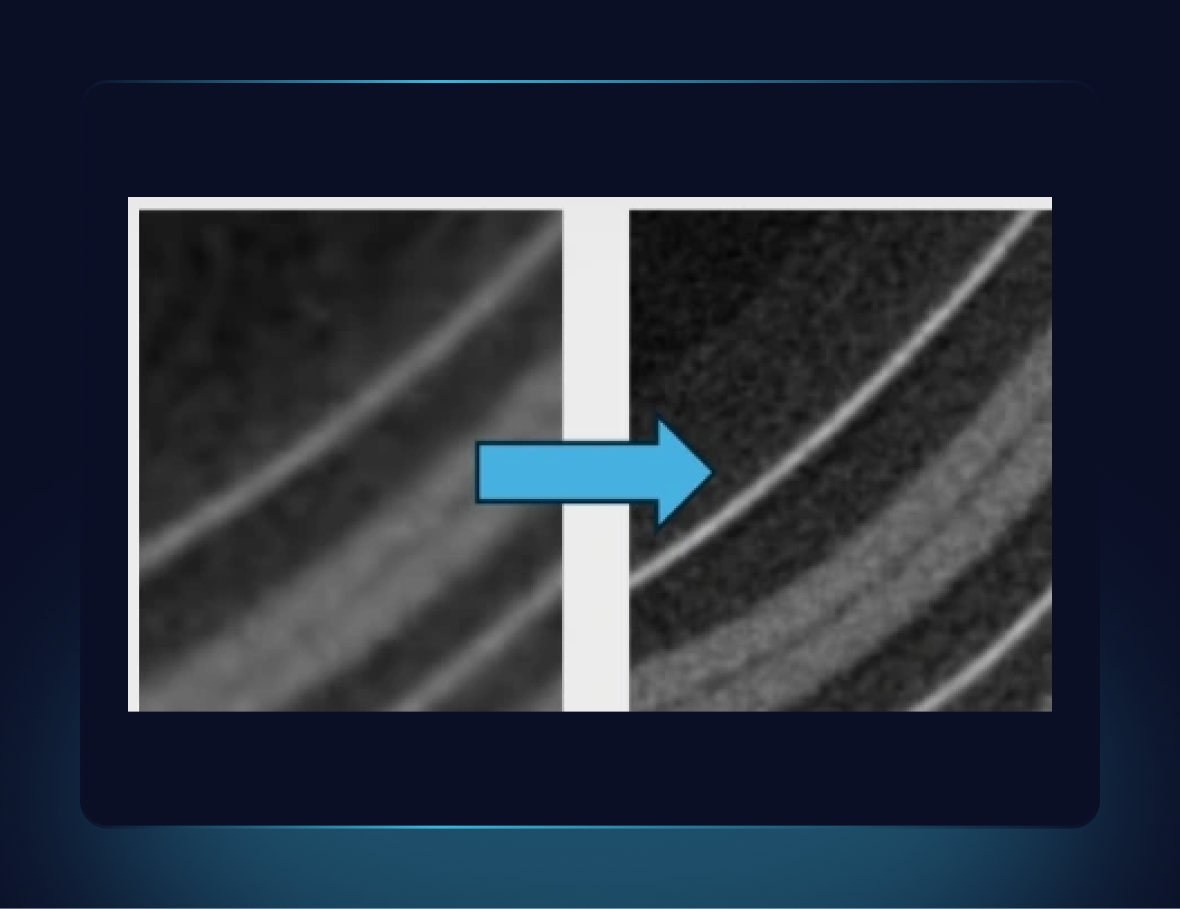
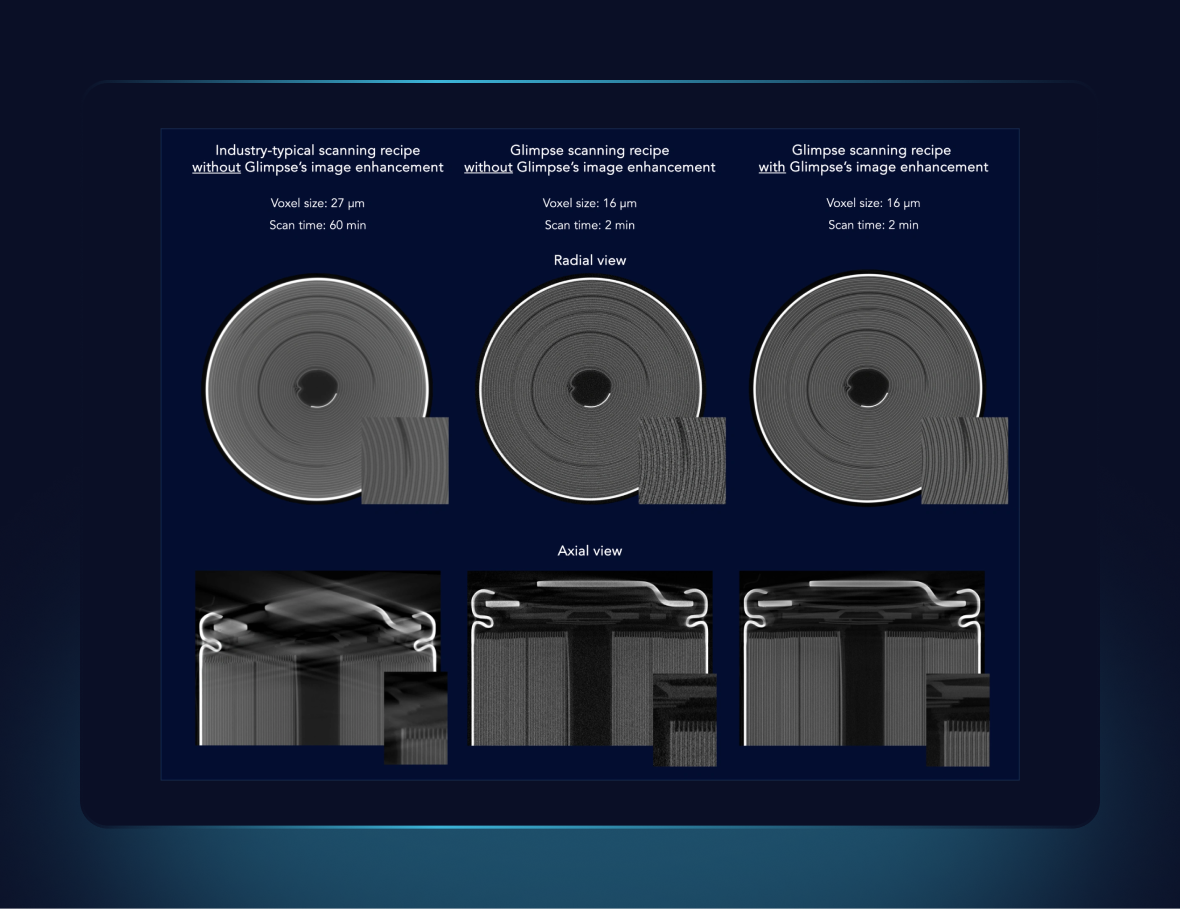
Glimpse's answer is resolution plus speed. Industrial CT had long been limited by scans that took two to four hours; at the time of writing Glimpse had that down to two minutes, with seconds-long scans in sight on next-generation equipment from VisiConsult and Excillum. CEO Eric Moch frames the payoff as a way out of the usual compromises between performance, cost, and manufacturability.
By the numbers
- 10 microns — the smallest detail Glimpse's CT scans resolve, about a seventh the width of a human hair
- ~100 microns — the thickness of the electrodes being inspected
- 2–4 hours — how long a conventional industrial CT scan took
- 2 minutes — Glimpse's scan time at the time of writing, with seconds-long scans in sight
- 141,000 Chevy Bolts recalled in 2021 over a folded separator and torn electrode tab, at a $2B cost to LG Energy Solution
If you can keep track of what's happening inside the cell, you can “push a limit without taking risks.” — Eric Moch, CEO and co-founder, Glimpse
You can read the article here (subscription required).