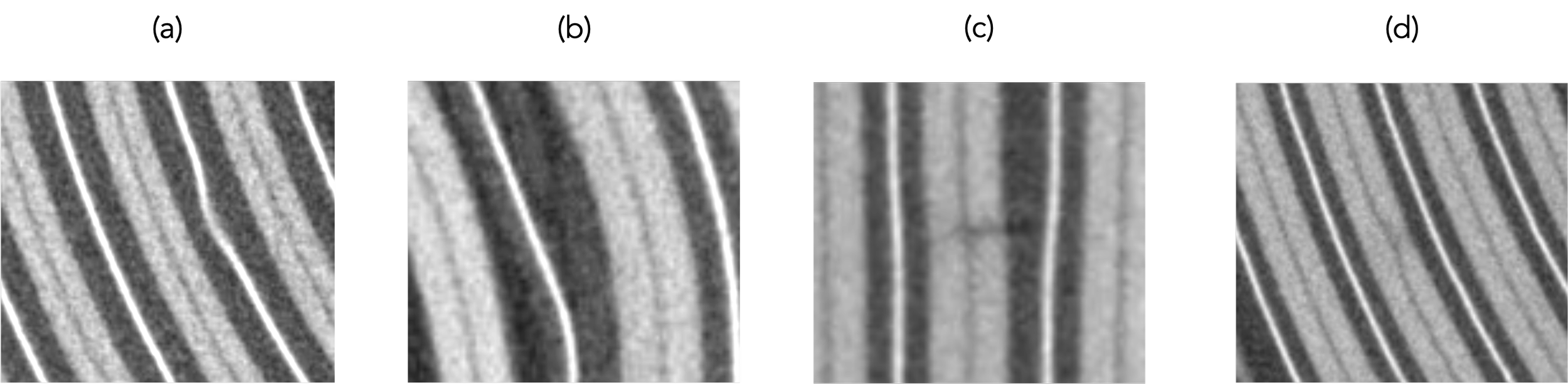
%20Gradient%20%E2%80%94%20light%20to%20dark-p-2000.png)

Ever wished you could study electrode delamination, subtle coating-thickness variations, or tiny pinholes? Thanks to Glimpse’s fast, ultra-high-res scanning, now you can!
Voxel size matters
Battery electrodes are typically 50–150 µm thick. This means that to quantify fine features—local anode swell, delamination, wrinkles—you need voxels about one-tenth that size.
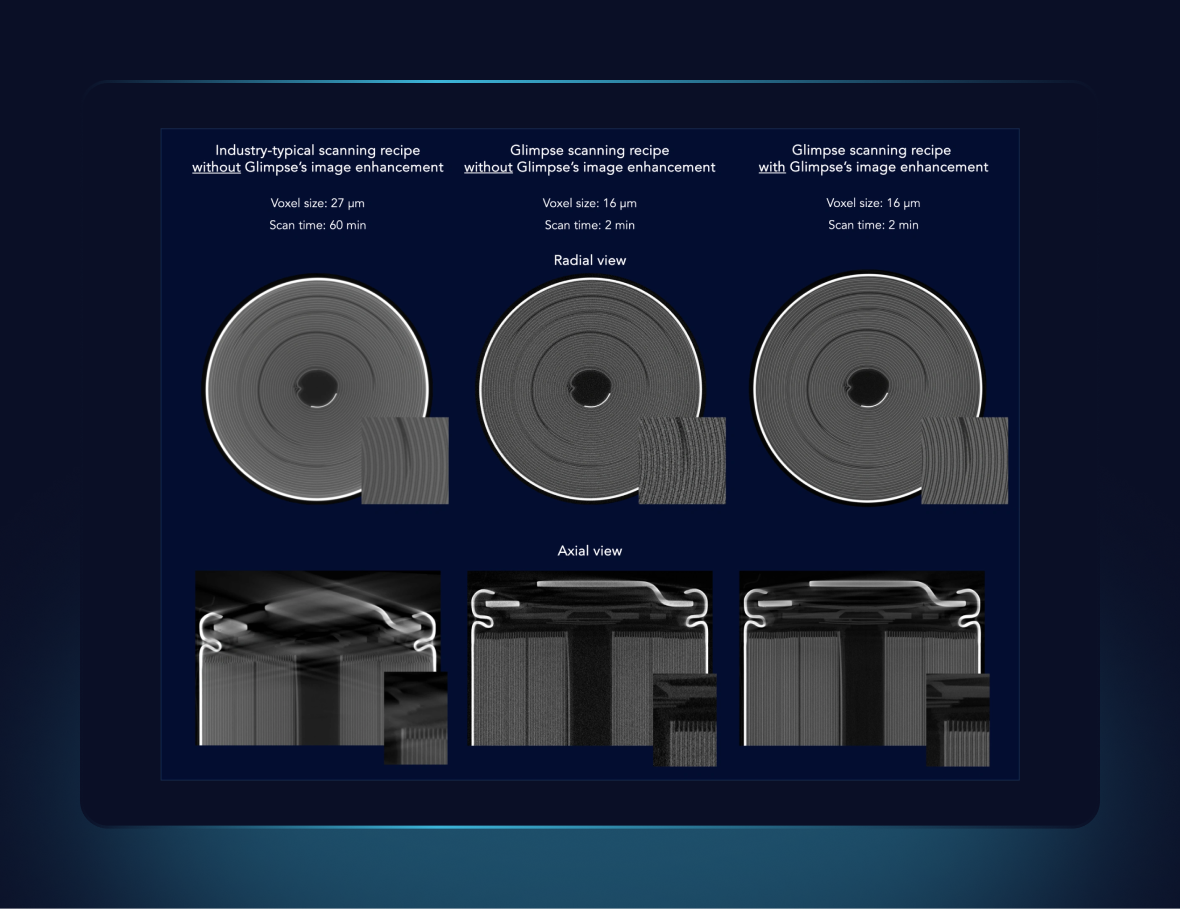
In our 1,000-cell demo that we released back in March 2024, most of our cylindrical-cell scans had voxel sizes of 15–20 µm—already impressive for full-cell, two-minute scans!
Now through our Scan On Demand service, we also offer scans with voxel sizes of 5–10 µm for cylindrical cells.
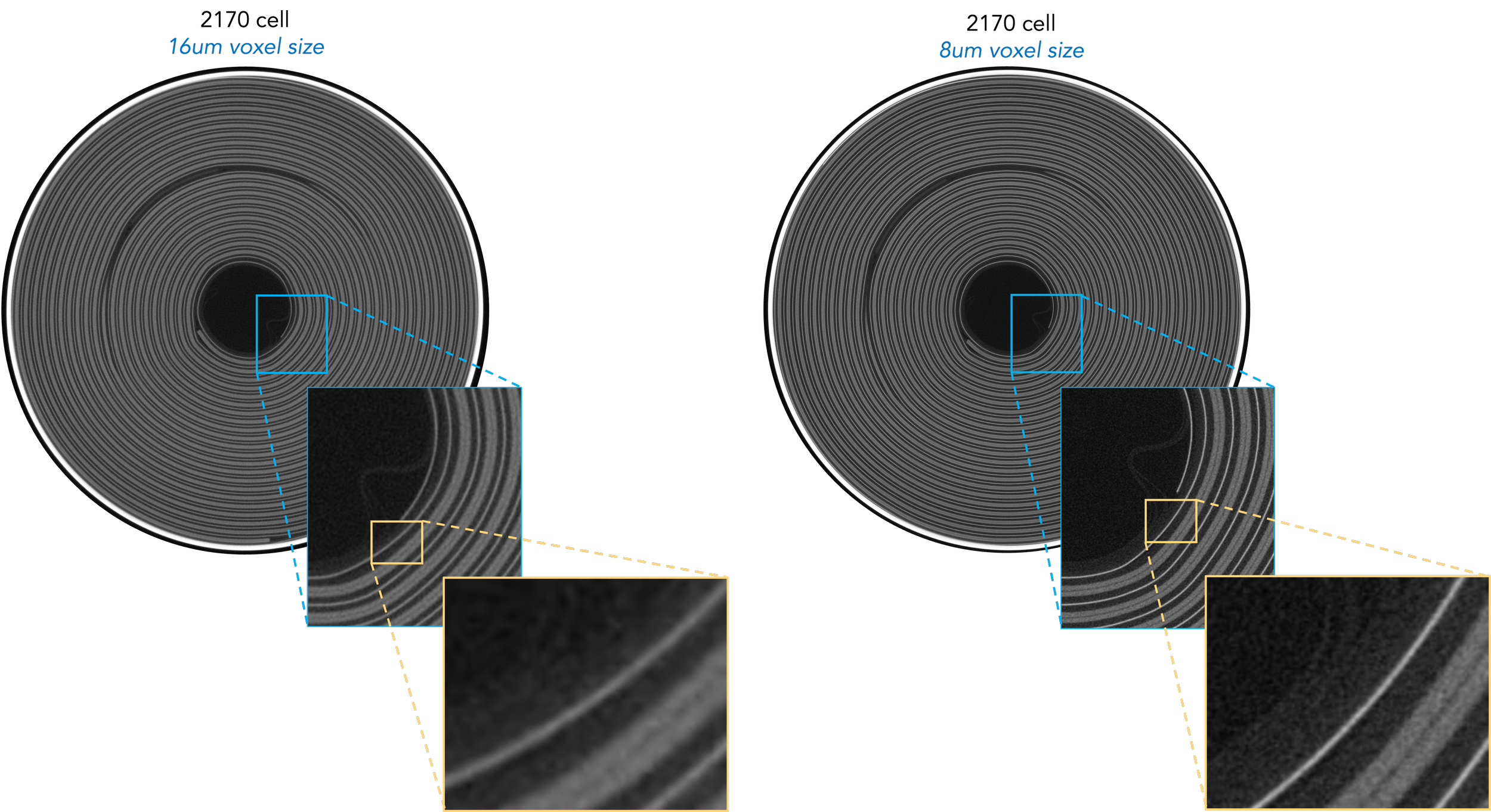
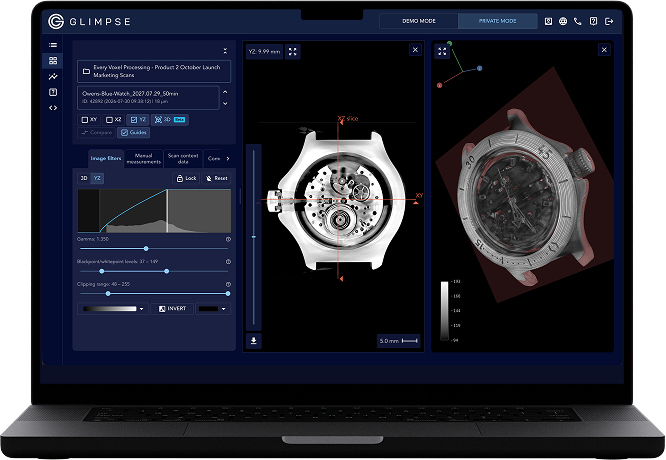
The cell above comes from our public demo on the Glimpse Portal, where we just added ultra-high-res scans of 18650, 2170, and 4680 cells. Want to explore them? Create a free account here.
What do fast ultra high-res scans unlock?
Battery cells are a bit like living organisms:
- During charging, the anode “breathes in,” swelling as it soaks up Li-ions.
- During discharging, it “breathes out,” contracting as ions return to the cathode.
Furthermore, as cells age, side reactions also cause the electrodes to swell. Being able to see the impact of this swelling in detail — and how it affects mechanical integrity — is crucial for qualifying new cell designs and diagnosing cell failures.
Local anode swell, coating cracks, foreign debris, electrode delamination… These minuscule features are hard to spot (let alone measure) at 15–20 µm. At 5–10 µm, they pop right out!